Online shoppers have different wants and needs than the customers you’re used to dealing with at your dealership. There’s a reason they’re shopping online rather than in-store, after all.
Once you’re tuned into these key differences, you can cater to their desires, foster brand loyalty, and increase revenue. So let’s get started!
3 Similarities Between Shoppers
#1 They Expect Good Customer Service
Customer service shouldn't be anything "special"… after all, it's just common courtesy to treat a fellow human being with respect.
Many dealerships will ignore phone calls or wait days before answering emails from online shoppers. Would you ignore a customer at the parts counter for hours before answering their question?
Be kind to your online customers, just like you are to the ones at the counter. Just because you can't see them face-to-face doesn't mean an online shopper is worth less.
You don't have to reply to emails the minute they hit your inbox. Online customers know that email is slower than a face-to-face conversation, but you should honestly attempt to answer all inquiries within one business day.
At the same time, the faster you reply to questions, the more likely you'll get the sale. If you make an online shopper wait too long, they'll probably take their question to one of your online parts competitors.
#2 They Don't Like Paying For Shipping
Shipping costs are one of those necessary evils when selling online. Online shoppers know that not everyone can offer free shipping as Amazon does, but that doesn't mean they like it.
Online part and accessory shoppers know that free shipping is rare for auto parts. Parts are often heavy, oversized, and odd-shaped… which raises the cost.
RELATED: 8 Tricks to Avoid Overpaying for Shipping
You don't have to offer free shipping on your parts website, but it's a powerful coupon you can offer customers to increase sales.
Try one of these promotions:
- Free shipping on any order over $150
- 50% off shipping during a holiday sale
#3 Shoppers Like a Good Sale
Who doesn’t like getting things at a discount?
Jump on any excuse you can find to discount your parts and accessories. Holidays, seasons, and random flash sales are all open season.
What type of coupon is best? That depends.
Free or discounted shipping is always a great go-to option. Another choice is to offer a straight discount, like 10% off or $10 off any order of $50 or more.
You can also make the discount specific to whatever your sale is. For example, if you’re running a “winter sales” promotion, try making all winter parts and accessories 15% off (while the rest of your inventory stays at a normal price).
Here are ways to promote:
- Promotional emails
- Packaging inserts
- Facebook and Twitter promos
- Automotive forums
3 Major Differences Between Shoppers
#1 Online Shoppers Are Willing to Wait for a Better Price
Online parts shoppers are savvy enough to find the best price. They’re willing to wait for it, too!
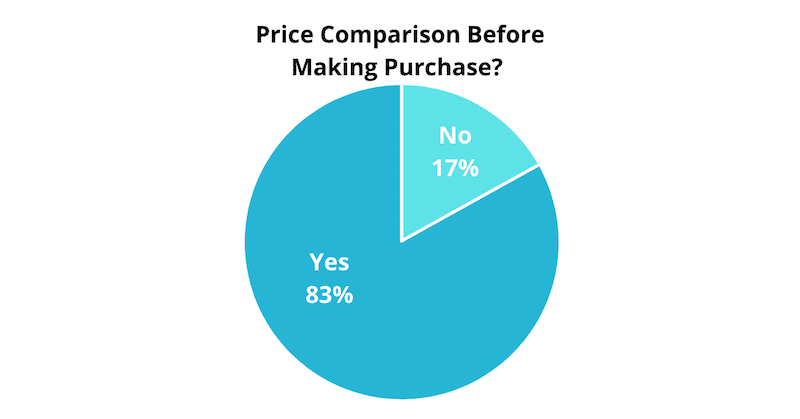
According to UPS’s “What’s Driving the Automotive Parts Online Shopper” study, 83% of customers compare prices before purchasing. Price matters. They’re also savvy enough to compare online prices with only a few clicks of their mouse, so you need to have competitive pricing.
They’re shopping online for price and convenience, not necessarily speed. Rather than drive to their local dealership to buy immediately, these customers are willing to wait a week or more for their purchase. Plus, they’ll wait even longer if it means free shipping!
What does this mean for your parts department?
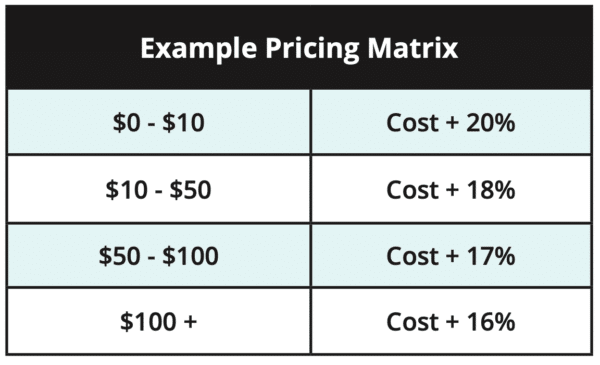
Don't be afraid to price comparatively! Selling parts online doesn't mean you lose out because of smaller margins; it means you make gains due to more volume. Selling parts online is a volume game.
Take a look at this pricing matrix:
#2 They Expect a Quality Online Experience
Online shopping has become part of the typical shopping experience for most people, and consumers have come to expect a very specific experience.
⭐ They want a clean, easy-to-navigate website.
⭐ They want an easy and accurate way to find the parts that fit their vehicle.
⭐ They want a website that is suited for both mobile phones and tablets.
Easy, easy, easy!
If they get frustrated by the design of your parts eCommerce store, they’ll buy from somewhere else.
Website design is usually out of your hands as a Parts Manager, so make sure your parts eCommerce solution can offer all the following:
- A professional, visually appealing website that is easy to navigate and understand
- Multiple ways to search and VIN-decoding capability
- A straightforward checkout process, with real-time calculated tax and shipping cost
- Responsive/mobile-friendly website design
#3 They Research More and Return Less
We’ve already mentioned how important comparison shopping is to online buyers. These customers are willing to wait for a lower price, but they don’t want to wait a week for the wrong part to arrive. They want to get it right the first time.
Online automotive shoppers are typically the type that knows what they want. That is, they’re somewhat familiar with the car market, and they know which piece they’re looking for.
Only 27% of online automotive shoppers claimed to have returned an item bought online, compared to 62% of general online shoppers.
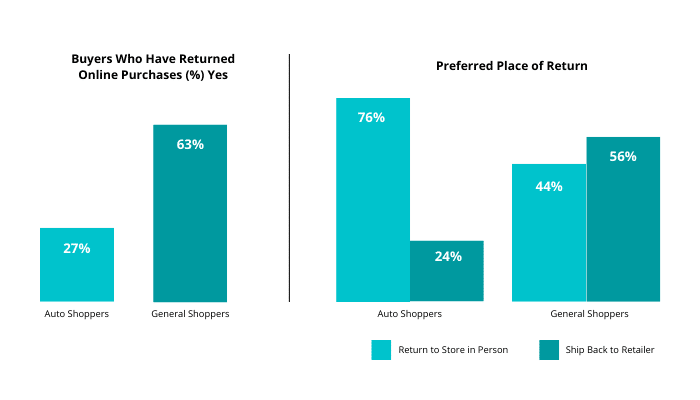
The stats make it clear: These shoppers do their research. They know how complicated fitment can be, and they want to get it right.
This makes buyer confidence a top priority. Help them find the right part and ease their fears about getting something wrong.
How to Improve Buyer Confidence
Leverage Online Reviews and Testimonials
Online reviews and testimonials can be especially helpful (or damaging!) to your store’s success.
On a marketplace like eBay Motors, it’s easy for customers to share their experience buying from you. Good reviews are invaluable, and bad reviews won’t be ignored. These customers will read through other people’s experiences to get an idea of whether or not they want to buy from you.
You can also get testimonials to your store’s Facebook page or directly on your parts website (At least, for RevolutionParts customers! We have a built-in testimonial feature for your web store).
Make Your Contact Information Easily Accessible
When a customer isn’t sure about which part they need, they might ask for help, and if you want them to buy their parts from you, it’s in your best interests to offer that help.
Including contact information will help your dealership twofold. It not only encourages customers to buy but also reduces returns. A parts professional like you can take the guesswork out of shopping for parts & accessories and ensure your customer buys the right part the first time.
Many dealerships hesitate to share a phone number or email address with their online shoppers. They’re either afraid of being overwhelmed with calls and emails, or they’re worried that local customers will find the parts website and be upset about the lower online prices.
Provide a Solid Return Policy
Online customers are also more likely to research your return policy before making a purchase.
Make sure any return policy or warranty information is easy to find so you can save them some trouble and get on their good side right away. Customers don’t appreciate it when you try to hide important information.
While you’re at it, create good shipping and cancellation policies, too! Be upfront about your policies and use them to protect yourself (and your customer).
Here are some resources:
Elevate Your Sales Game and Fast-Track Online Success
Understanding the unique preferences of online shoppers is crucial for your parts department's success online. Every detail counts in cultivating loyalty and boosting online sales, from personalized customer service to strategic sales promotions. The journey from insight to action begins with recognizing these key differences and leveraging them to your advantage.
Ready to elevate your online sales strategy? Download our guide, "The 8 Keys to Successfully Selling OEM Parts Online," for expert insights and actionable strategies to thrive in the online marketplace. Transform your approach today and unlock the full potential of your digital sales.